


CHAPTER 4: The DEMOCRATIC (R)EVOLUTION We are better than we realize we are. For the first time, we can now create institutions of governance that elicit our best. Copyright 2026 by Paul L. LaClair
Value for Monday of Week 43 in the season of Assessing
Being Mature
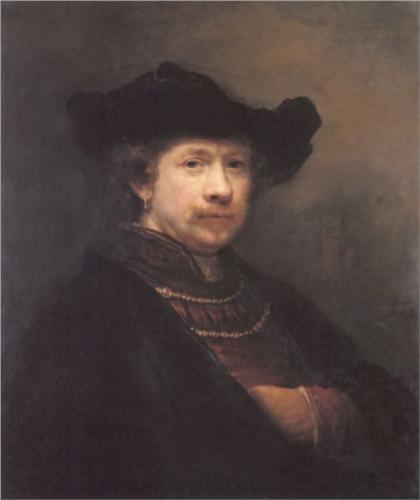
People can mature intellectually, emotionally, physically, and in development of their skills, talents and abilities.
- I live in that solitude which is painful in youth, but delicious in the years of maturity. [Albert Einstein]
- I think part of maturity is knowing who you are. [attributed to Rob Lowe]
- Confidence comes with maturity, being more accepting of yourself. [attributed to Nicole Scherzinger]
- Maturity is the ability to reap without apology and not complain when things don’t go well. [Jim Rohn]
Maturity and self-actualization are closely related. Both represent a manner of coming to one’s full self. However, maturity is usually assessed in comparison with others.
Emotional maturity is essential to a stable and productive life. Elements include compathy, hope and joy, and self-regulation. It has been studied relative to child development, early development programs, 5-minute Apgar scores at birth, early childhood anemia, family income as it affects children, neural network development and risk-taking in late adolescence, cyberbullying, parenthood, doctor training and competence, nurse burnout, yoga therapy, autism and intellectual disabilities, depression in children and adolescents, out-of-home care for children, residential crowding and commuting time, nuclear family functioning, age of pregnant women, maternal depression in early childhood, birth timing of siblings, breast augmentation surgery, past military service in the aged, and existential loneliness at the end of life.
Intellectual maturity is defined as the “capacity to think, to judge, to evaluate, to discriminate, to form concepts, to plan, to use your will, to use your mind, to make decisions, to utilize your assets, to direct your life and, last but not least, to educate or reeducate the childish emotions by implanting your own concepts that you have arrived at independently, by thinking things through.” It can be measured by the Goodenough-Harris Drawing Test in children, and in youths aged 12-17 years, along with related demographic and socioeconomic factors in children, and in youth aged 12-17 years. One study reveals that “late-blooming composers and writers live longer than child prodigies”. At least one scholar distinguishes between maturity and immaturity in bright youth.
When you listen to a great musical artist over time, often you can hear the progressive development of their skills. Early Ray Charles does not match the more mature Ray Charles. While visiting my son a few years ago, he was playing string quartets on his sound system. He asked me who was the composer. I replied, “I don’t think it’s Haydn.” My son corrected me: “It is Haydn.” I rescinded immediately, “Then it’s opus one or opus two.” Matt shook his head, and said “It’s opus 2.” A listen to Haydn’s string quartets in chronological order reveal a clear progression in maturity. The same is true of artists in many other fields. In science, however, the greatest discoveries usually are made by young scientists, at the beginning of their careers.
Real
True Narratives
Annie Sullivan’s account of Helen’s life-changing revelation, compared to Helen’s, illustrates Annie’s comparative maturity as an adult.
I must write you a line this morning because something very important has happened. Helen has taken the second great step in her education. She has learned that everything has a name, and that the manual alphabet is the key to everything she wants to know. In a previous letter I think I wrote you that "mug" and "milk" had given Helen more trouble than all the rest. She confused the nouns with the verb "drink." She didn't know the word for "drink," but went through the pantomime of drinking whenever she spelled "mug" or "milk." This morning, while she was washing, she wanted to know the name for "water." When she wants to know the name of anything, she points to it and pats my hand. I spelled "w-a-t-e-r" and thought no more about it until after breakfast. Then it occurred to me that with the help of this new word I might succeed in straightening out the "mug-milk" difficulty. We went out to the pump-house, and I made Helen hold her mug under the spout while I pumped. As the cold water gushed forth, filling the mug, I spelled "w-a-t-e-r" in Helen's free hand. The word coming so close upon the sensation of cold water rushing over her hand seemed to startle her. She dropped the mug and stood as one transfixed. A new light came into her face. She spelled "water" several times. Then she dropped on the ground and asked for its name and pointed to the pump and the trellis, and suddenly turning round she asked for my name. I spelled "Teacher." Just then the nurse brought Helen's little sister into the pump-house, and Helen spelled "baby" and pointed to the nurse. All the way back to the house she was highly excited, and learned the name of every object she touched, so that in a few hours she had added thirty new words to her vocabulary. Here are some of them: Door, open, shut, give, go, come, and a great many more. P. S.–I didn't finish my letter in time to get it posted last night; so I shall add a line. Helen got up this morning like a radiant fairy. She has flitted from object to object, asking the name of everything and kissing me for very gladness. Last night when I got in bed, she stole into my arms of her own accord and kissed me for the first timer, and I thought my heart would burst, so full was it of joy. [Annie Sullivan, Letters, April 5, 1887.]
Technical and Analytical Readings
- Jerome Kagan and Howard A. Moss, Birth to Maturity: A Study in Psychological Development (Yale University Press, 1983).
- J.M. Tanner, Fetus Into Man: Physical Growth from Conception to Maturity (Harvard University Press, 1990).
Photographs
Documentary and Educational Films
Imaginary
Fictional Narratives
Novels and stories:
- Susan Choi, My Education: A Novel (Viking, 2013): “She invokes the prosaic demands the 21-year-old has never suffered in order to explain why things between them will never work out, and teaches Regina — by hurting her — that the single-minded force of a girl’s love ‘never lasts.’”
- Nicole Krauss, To Be a Man: Stories (Harper/HarperCollins, 2020): “Nicole Krauss is less interested in describing life’s grand explosions than she is in showing how people make sense of the rubble.”
Poetry
Music: Composers, artists, and major works
Benjamin Britten, String Quartet No. 3 in G Major, Op. 94 (1975) (approx. 27-32’) (list of recorded performances), was the composer’s final completed instrumental work. Exploring relationships, manic drive, solitary reflection, life’s absurdities, and self-assessment, it reflects a master composer at the end of a brilliant and accomplished life. John Bridcut observed: “It’s not often that one of a composer’s final utterances holds the key for a newcomer to unlock his music, but ‘Solo’, as it is called, does just that. It features a long, haunting, cantilena from the first violin, interrupted by the sweetest birdsong, while his three colleagues produce otherworldly sounds from a mixture of harmonics, pizzicatos, glissandos, arpeggios and trills. With such a rich sound palette, it is hard to believe it is a string quartet – you could swear there are wind instruments here, and others not yet invented.” “The Passacaglia proceeds calmly to its close, where the ambiguous concluding chord dissolves as the upper three voices fade away, leaving the cello’s deep D to continue alone and then drift softly into silence. Britten’s comment on this ending was succinct: 'I wanted the work to end with a question.'” Top performances on disc are by Amadeus Quartet in 1977, Endellion Quartet in 1986, Lindsay Quartet in 1988, Maggini Quartet in 1997, Brodsky Quartet in 2001 ***, Belcea Quartet in 2003, Emperor Quartet in 2005, Doric String Quartet in 2018, and Britten Quartet in 2022.
A set of twelve violin concerti by Antonio Vivaldi, titled “Il Cimento dell’Armonie e dell’Inventione”, 12 Concerti for Violin, Strings and Continuo, Op. 8 (1725) (approx. 108-124’) (list of recorded performances), are confidently mature works, ostensibly about harmony (Armonia) and invention (Inventione) The first four of these comprise his “Four Seasons” (La Quattro Stagioni). Excellent recorded performances of the entire opus are by Alice Harnoncourt & Concentus Musicus Wien in 1977, Maier & Collegium Aureum in 1977 (concerti 1-6; concerti 7-12), Standage & English Concert in 1982, Rolla & Liszt Ferenc Chamber Orchestra in 1983, Huggett & Raglan Baroque Players in 1990, Chiarappa & Accademia Bizantia in 1994, Biondi & Europa Galante in 2001, Thomas & Bournemouth Sinfonietta in 2004, Beznosoiuk & Avison Ensemble in 2012, and Guglielmo & L'Arte dell'Arco in 2016.
Franz Joseph Haydn’s final few symphonies display that composer’s maturity, especially when compared to and contrasted with his earlier symphonies.
Symphony No. 88 in G Major, Hob. I:88 (1787) (approx. 20-25’) (list of recorded performances), “is undeniably firmly rooted in the classical tradition. Set in the standard four movements, it offers all of the courtly elegance, charm, and witty good humor we would expect from this innovative and prolific ‘father of the symphony.’ At the same time, this Symphony, written two years before the outbreak of the French Revolution, contains some fascinating foreshadowings of music to come.” Top performances are by
- Leipzig Gewandhausorchester (Abendroth) in 1944;
- Berlin Philharmonic Orchestra (Furtwängler) in 1951;
- Cleveland Orchestra (Szell) in 1954;
- Chicago Symphony Orchestra (Reiner) in 1960;
- Vienna Chamber Orchestra (Märzendorfer) in 1971;
- Vienna Philharmonic Orchestra (Bernstein) in 1983; and
- Berlin Philharmonic Orchestra (Rattle) in 2007.
Symphony No 89 in F Major, Hob. I:89 (1787) (approx. 19-24’) (list of recorded performances): “Symphony No. 89 . . . has always stood in the shadow of its disproportionately more popular G major sister, No. 88. Reserved, cool and conceptually flawless, it is reminiscent of the consummate form of porcelain figures of that era, according to H. C. Robbins Landon. When it is said Joseph Haydn opened the doors to the 18th century salon to let in a bit of fresh air, then for No. 89 he temporarily shut them again.” Top performances are by
- Philharmonia Hungarica (Doráti) in 1972;
- Vienna Chamber Orchestra (Märzendorfer) in 1971;
- Austro-Hungarian Haydn Orchestra (Adam Fischer) in 1992;
- Orchestra of the 18th Century (Brüggen) in 2007; and
- Berlin Philharmonic Orchestra (Rattle) in 2007.
Symphony No. 90 in C Major, Hob. I:90 (1788) (approx. 22-29’) (list of recorded performances): “Here for the first time in the history of symphony the attempt is made to blend a slow introduction and rapid main section with one another.” Top performances are by:
- Vienna Chamber Orchestra (Märzendorfer) in 1971;
- Orchestra of the 18th Century (Brüggen) in 1988;
- Nicolaus Esterházy Sinfonia (Drahos) in 1994; and
- Berlin Philharmonic Orchestra (Rattle) in 2007.
Symphony No. 91 in E-flat Major, Hob. I:91 (1788) (approx. 22-26’) (list of recorded performances), “features many a detail which delight the connoisseur: the principal theme of the first movement is a two-part structure in double counterpoint at the octave, that is, the higher voice and lower voice are interchangeable in accordance with strict rules. In the intermediary episode other contrapuntal parts appear which are then brought to a joint culmination at the end of the movement. The second movement, a movement of variations, has several humorous effects, such as the long trills shortly before the end which sound as if the entire orchestra has got out of control. The final movement features additional compositional treats for connoisseurs: for example, specific segments are extracted from the main theme in order to be used then for accompaniment . . .” Top performances are by:
- Vienna Chamber Orchestra (Märzendorfer) in 1971;
- Austro-Hungarian Haydn Orchestra (Adam Fischer) in 1992;
- Orchestra of the 18th Century (Brüggen) in 2007; and
- Berlin Philharmonic Orchestra (Rattle) in 2007.
Symphony No. 93 in D Major, Hob. I:93 (1791) (approx. 21-24’) (list of recorded performances): “Haydn’s London symphonies (nos.93–104) crown his career as a symphonic composer. Not only do they outdo the Paris symphonies stylistically, but he produced them in person for rapturous audiences; this interaction stimulated him to ever bolder and more original conceptions.” Top recorded performances are by
- Cleveland Orchestra (Szell) in 1968;
- New York Philharmonic Orchestra (Bernstein) in 1973;
- Chamber Orchestra of Europe (Abbado) in 1990; and
- Austro-Hungarian Haydn Orchestra (Adam Fischer) in 1992.
Symphony No. 95 in C Minor, Hob. I:95 (1791) (approx. 18-21’) (list of recorded performances): “At this point in his charmed maturity was he not willing to go up against such a C minor work as Mozart’s piano concerto (K. 491 of 1786)? We’ll never know the answer to that question, nor, I suppose, should we even presume to ask. But we know that Haydn was quite in awe of Wolfgang Amadeus’ genius, famously telling Mozart père, '. . . your son is the greatest composer known to me either in person or by name. He has taste and, what is more, the most profound knowledge of music.'” “This piece contains four movements that contrast each other but yet compliment. This piece also contains many style characteristics and formal structures that can be found throughout these movements.” Top performances are by:
- Cleveland Orchestra (Szell) in 1971;
- New York Philharmonic Orchestra (Bernstein) in 1974;
- Concertgebouw Orchestra (Colin Davis) in 1980;
- Royal Concertgebouw Orchestra (Harnoncourt) in 1991; and
- Cappella Coloniensis (Weil) in 2008.
Symphony No. 96 in D Major, “Miracle”, Hob. I:96 (1791) (approx. 22-24’) (list of recorded performances): “The symphony features all the elements characteristic of Haydn’s late symphonic work and on which Haydn founded his reputation as a ‘classical composer’: extreme economy and mastery of form coupled with superior individual arrangement of each of the movements.” Top performances are by:
- New York Philharmonic (Walter) in 1937;
- New York Philharmonic (Bernstein);
- Orchestra of the 18th Century (Brüggen) in 2007; and
- Concertgebouw Orchestra (Colin Davis) in 1981.
Symphony No. 97 in C Major, Hob. I:97 (1792) (approx. 24-29’) (list of recorded performances): “Boisterous and festive, Symphony No. 97 is filled with the celebratory sounds of trumpets and drums. A single, emphatic octave ‘C’ sets in motion the musical ‘heartbeat’ of the first movement’s Adagio introduction. Contemplative and nostalgic, this introduction, with all of its lamenting musical sighs, lulls us into a quiet dreamscape.” Top performances are by:
- Cleveland Orchestra (Szell) in 1957;
- New York Philharmonic Orchestra (Bernstein) live;
- Royal Concertgebouw Orchestra (Harnoncourt) in 1993;
- Orchestra of the 18th Century (Brüggen) in 1994; and
- Tanglewood Music Center Orchestra (Nelsons) in 2018.
Symphony 98 in B-flat Major, Hob. I:98 (1792) (approx. 26-30’) (list of recorded performances): “Using both articulative variants of the theme, (a segment in the first movement) extends far beyond everything Haydn demonstrates of compositional elegance, contrapuntal skill and combinational capacity in earlier symphonies. . .” Top performances are by:
- New York Philharmonic Orchestra (Bernstein) in 1980;
- Royal Concertgebouw Orchestra (Colin Davis) in 1980;
- Royal Concertgebouw Orchestra (Harnoncourt) in 1990;
- London Symphony Orchestra (Colin Davis) in 2014; and
- Kammerorchester Basel (Antonini) in 2024.
Symphony No. 99 in E-flat Major, Hob. I:99 (1794) (approx. 25-31’) (list of recorded performances): “. . . this work, along with Haydn’s other 'London' Symphonies . . . unleashed a new kind of music which was louder, bolder, and more intensely dramatic. Gone was the aristocratic elegance of Haydn’s early symphonies, written for the court of Prince Esterházy where the composer was happily employed for 30 years. The Industrial Age had begun. Revolution was in the air.” Top performances are by:
- Cleveland Orchestra (Szell) in 1966;
- New York Philharmonic (Bernstein) in 1972;
- Berlin Philharmonic Orchestra (Karajan) in 1982;
- Vienna Philharmonic Orchestra (Giulini) in 1986; and
- Orchestra of the 18th Century (Brüggen) in 1992.
Symphony No. 102 in B-flat Major, Hob. I:102 (1794) (approx. 23-28’) (list of recorded performances): “If the nickname Miracle (or any other nickname, for that matter) had become attached to this piece, it would probably be every bit as well known as the other nicknamed ‘London’ symphonies . . . It is one of the set’s finest, covering a broad emotional range that suggests witty Mozartian grace at one end and sober Beethovenian profundity at the other.” Top recorded performances are by:
- Vienna Philharmonic Orchestra (Bernstein) in 1972;
- London Philharmonic Orchestra (Jochum) in 1973;
- Royal Concertgebouw Orchestra (Harnoncourt) in 1988;
- Orchestra of the 18th Century (Brüggen) in 1992;
- City of Birmingham Symphony Orchestra (Rattle) in 1995; and
- Boston Baroque (Pearlman) in 2012.
Other works:
- Mieczysław Weinberg, Chamber Symphony No. 1 for string orchestra, Op. 145 (1986) (approx. 25-28’) (list of recorded performances): serious, nuanced and complex
- Ida Gotkovsky, Symphonie de printemps (Spring Symphony) for orchestra (1973) (approx 27’): despite its title, the work traverses all four seasons, culminating in movements reflecting change, growth and maturity.
- Sergei Prokofiev’s two string quartets: String Quartet No. 1 in B Minor, Op. 50 (1930) (approx. 23-24’) (list of recorded performances) “comes shortly after the first version of his symphony no. 4, and just before the fourth piano concerto (the left-handed one) (with a few works in between), so it seems a bit late in coming for someone who already had some quite memorable works under his belt. Maybe that helped to make his first string quartet an impressive one”; String Quartet No. 2 in F Major, Op. 92 (1941) (approx. 21-23’) (list of recorded performances): “He poured the exotic folk-songs, dance rhythms and harmonies of the region into the classical mold of the string quartet. It seemed that his time as a war refugee spurred his fertile imagination.”
- Ferruccio Busoni, Violin Sonata No. 2 in E minor, Op. 36a, BV 244 (1898) (approx. 32-35’) (list of recorded performances) “represents an arrival of the composer’s ideas into his mature later style.”
- Erich Korngold, Piano Sonata No. 3 in C Major, Op. 25 (1931) (approx. 24-26’) (list of recorded performances): “With its roots firmly planted in Romantic and symphonic traditions, it is at once highly theatrical and rhapsodic, requiring a wide range of character from the interpreter . . .”
- Robert Fürstenthal, Spätlese (Late Harvest) (songs)
- Edvard Grieg, Violin Sonata No. 3 in C Minor, Op. 45 (1887) (approx. 23-24’) (recordings) “represents Grieg’s mature voice, blending Norwegian folk-inspired elements with the broader Romantic tradition.” Per Grieg, this sonata brought him to a “wider horizon” as a composer.
Albums:
- Shemekia Copeland, “Turn the Heat Up” (1998) (63’): “This amazing debut . . . was cut when Shemekia was only 18, but her emotional maturity was that of an adult who had walked through fire and come out the other side.” [Downbeat magazine, September 2021, p. 40.]
- Matthias Tschopp Quartet, “Untitled” (2017) (65’)
- Ravi Coltrane, “Spirit Fiction” (2012) (59’): “. . . there's a depth and seasoned quality to Spirit Fiction that befits an artist approaching 50.”
- Bennie Maupin & Adam Rudolph, "Symphonic Tone Poem for Brother Yusef” (2022) (41’), in honor of Yusef Lateef: “The album weaves a magical, meditative path across five movements, combining electronics, saxophone, voices and Rudolph’s wide palette of percussion from hand drums to thumb pianos and gongs.”
- Miles Davis, “Melbourne ‘88”: the great jazz trumpeter and musical innovator, near the end of his life
- David Murray, Brad Jones & Hamid Drake, “Seriana Promethea” (2022) (58’): observing how age has changed him as a musician, Murray says, “We tend to play fewer notes, but with more authority. We play truer tones.”
- 137, “Strangeness Oscillations” (2024) (44’): “Playing mostly improvised music, and deftly navigating a space between fierceness and sensitivity, the four musicians (and friends) have created a dialogue of singular voices that converse and battle with extraordinary fluency, an openness to listening, and a miraculously shared sense of evolving form.”
Music: songs and other short pieces
- Bob Dylan, “My Back Pages” (lyrics)
Visual Arts
Film and Stage
- Back to the Future, a fantasy in which a teenager whose father had been bullied in high school reclaims his father’s dignity: a film about maturity as an ideal and the pivotal effect of ethical decisions


